
Why Harness Was a No-Go for My Home Lab
The Harness SaaS free plan capped stage and pipeline run times, and Harness Open Source ran steps through a Docker daemon instead of Kubernetes pods, so my home lab CI went back to Jenkins.
The Harness SaaS free plan capped stage and pipeline run times, and Harness Open Source ran steps through a Docker daemon instead of Kubernetes pods, so my home lab CI went back to Jenkins.

No one has to like the paperclip factory, but pretending the world is going back to loose-leaf isn’t a strategy.
I audited my Emacs config, fixed bugs that had been there for years, cut startup time from 0.76s to 0.25s, moved to Emacs 31's built-in tree-sitter and eglot, and turned the config into a literate Org file.
I have a rack of servers in my garage, so I would rather not pay a host for CPU and disk I already own. A WireGuard tunnel and one small VPS put a site on those machines at a public hostname.
Grammars, junctions, lazy infinite lists, user-defined operators, a metaobject protocol you can call at runtime, and operators spelled with Unicode. Here are a lot of examples, normal and exotic. I ran every one of them.
I just released LearnRaku.dev into production. It is an interactive, browser-based trainer for learning Raku. You get an exercise, a failing spec, and an editor. You write code until the spec…
A few weeks ago I blog'd about shipping behave.dev , the first Raku app I ever put into production. This blog post is an even bigger deal to me personally. The site you are reading right now,...
Shipping My First Raku App: behave.dev I just released behave.dev into production. It's the homepage for BDD::Behave , my behavior-driven testing framework for Raku. It's the first Raku application...

Flying at Peeler Park, May 2nd, 2026
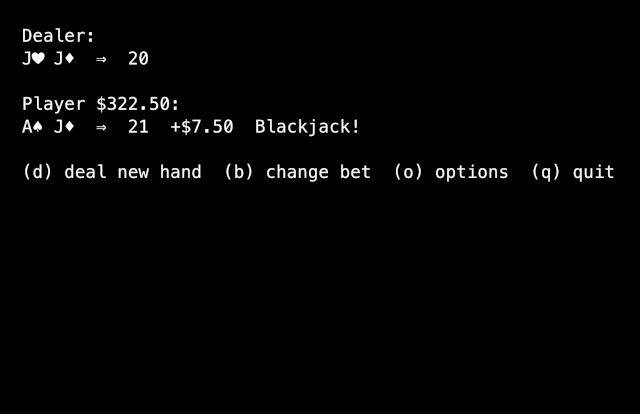
I wrote Blackjack in Clojure.