
Loose-Leaf Is Not Coming Back
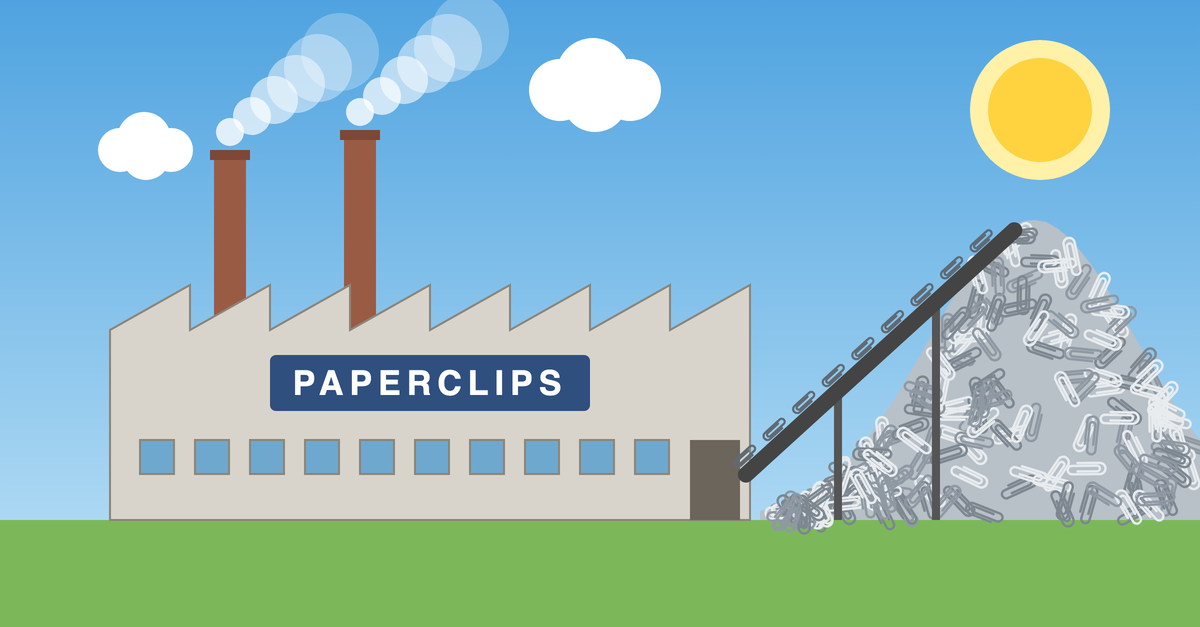
No one has to like the paperclip factory, but pretending the world is going back to loose-leaf isn’t a strategy.
Every time tech shifts, a loud crowd plants its feet in the mud and swears the sky is falling. They cross their arms, pout, and act as if refusing to touch the new thing makes them pure. It happened when compilers arrived, and people cried that real coders write raw machine code. It happened again when the web arrived, when cloud infrastructure took over, and when open-source software stopped being a fringe hobby for snarky gray-beard gatekeepers. Now some of the same crowds are having a full-blown meltdown over generative AI. They write long, tear-soaked manifestos about the soul of engineering, praying for some magic crash that will wipe every model off the map and bring back the good old days of manually typing boilerplate code until their wrists give out. It is pure denial, and it's a little embarrassing to watch.
The reality on the ground doesn’t care about their feelings. The assembly line is already running, the gears are turning, and the rest of us are busy getting work done. Those of us who use these tools every day aren’t doing it because we worship the machines or want to be replaced by a small shell script. We use them because we have real jobs with real deadlines, and spending four hours wrestling with messy configs, writing mundane boilerplate code, or hunting down a missing semicolon is a waste of a human lifespan. Handing the grunt work to a model so you can focus on the actual architecture is only common sense. You feed the machine the boring parts, verify the output, fix the rough edges, and ship. It's not magic. It's leverage.
The funniest part of the debate is the tired lie that only clueless juniors or lazy hacks use these tools. Talk to subject-matter experts and senior engineers who have been shipping production code for decades, and you hear the exact opposite. Good senior engineers love this stuff because they know how to spot garbage instantly. They treat a model like a hyperactive intern with a photographic memory but no common sense. They don't ask it to design an entire system from scratch without supervision. They use it to generate edge-case specs and tests, spit out shell scripts, draft tricky syntax, or bounce architectural ideas around at two in the morning. When an expert uses an LLM as an accelerator, the speed boost is massive. The seniors who get it are shipping circles around the purists who insist on carving every single byte out of electrons and silicon by hand.
Critics love to sit back and smugly point to the balance sheets of the big AI providers. They see the crazy burn rates, the billions spent on compute, and the wild valuations, and they convince themselves the whole thing will collapse like a crypto rug pull. They think that if the venture cash dries up and a couple of high-profile tech giants collapse under their own hype, the models will vanish into thin air. That is wishful thinking by people who don't understand how code works once it escapes into the wild.
The cat is out of the bag: the model weights have been downloaded, and open-source models already sit on millions of local hard drives and private servers. Even if every major hosted provider went belly up tomorrow, local and open weights are not going anywhere. You can run surprisingly capable models on consumer hardware right now without paying a dime to any cloud vendor. You cannot un-invent math, and you cannot un-ship software that is already mirrored across ten thousand torrent trackers and home labs. The knowledge is out in the open, the tooling is getting leaner, and the barrier to running your own stack is getting lower by the day.
Businesses know this, which is why the corporate train seems to have no brakes. A company exists to make money and move fast, not to preserve the nostalgic purity of your text editor. If a team can shave thirty percent off a release cycle by integrating a local model into their pipelines, they'll do it. They don't care about the philosophical angst of purists on social media. They care about shipping features before their competitors. End of story. If proprietary services become too expensive or shut down, companies will spin up in-house open-source alternatives and keep moving. The efficiency gains are too real to ignore, and no one is going to vote to make things slower on purpose.
So the purists have two paths ahead of them. They can sit in the corner, clutching their manual tools like holy relics and loudly insisting that the new stuff is evil, fake, or just a temporary fad. They can wait for the paperclip factory to magically dismantle itself and return the world to neat stacks of unfastened paper. Or... they can pull their heads out of the sand, grab the fasteners, and learn to use them.
The machine doesn't wait for anyone's permission to exist, and no one is coming by to unplug it out of respect for anyone's principles. No one has to love the factory, but standing around with a stack of loose-leaf paper while a hurricane is whirling is a sure way to a lot of work.